Forty Days of Love: The Spiritual Meaning of Arbaeen
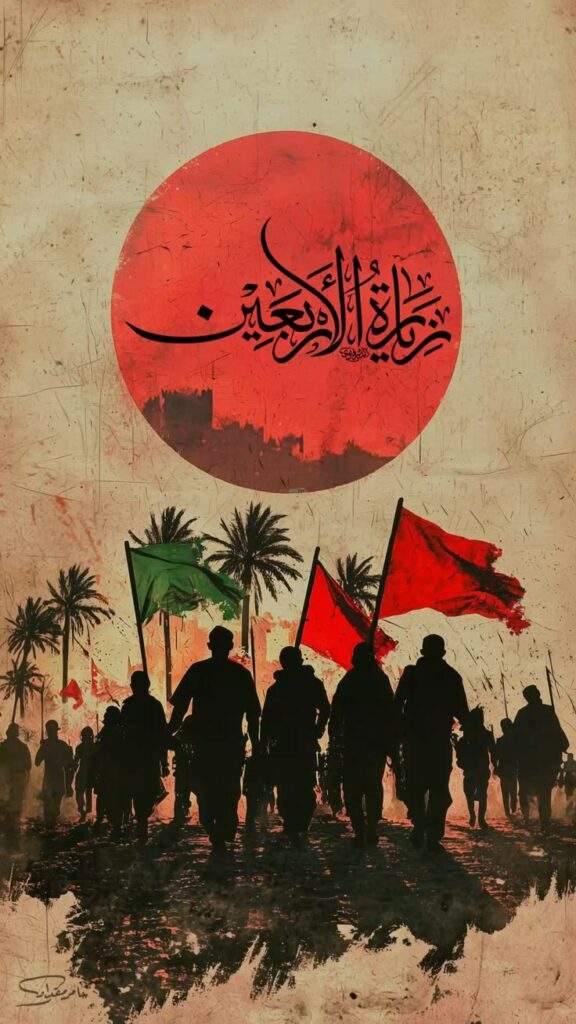
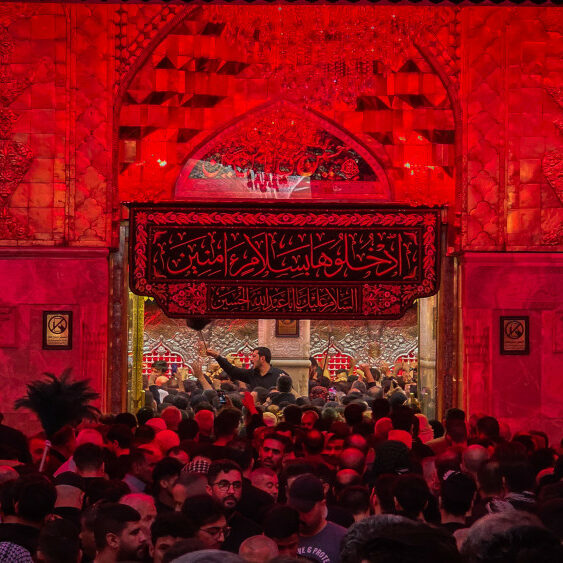
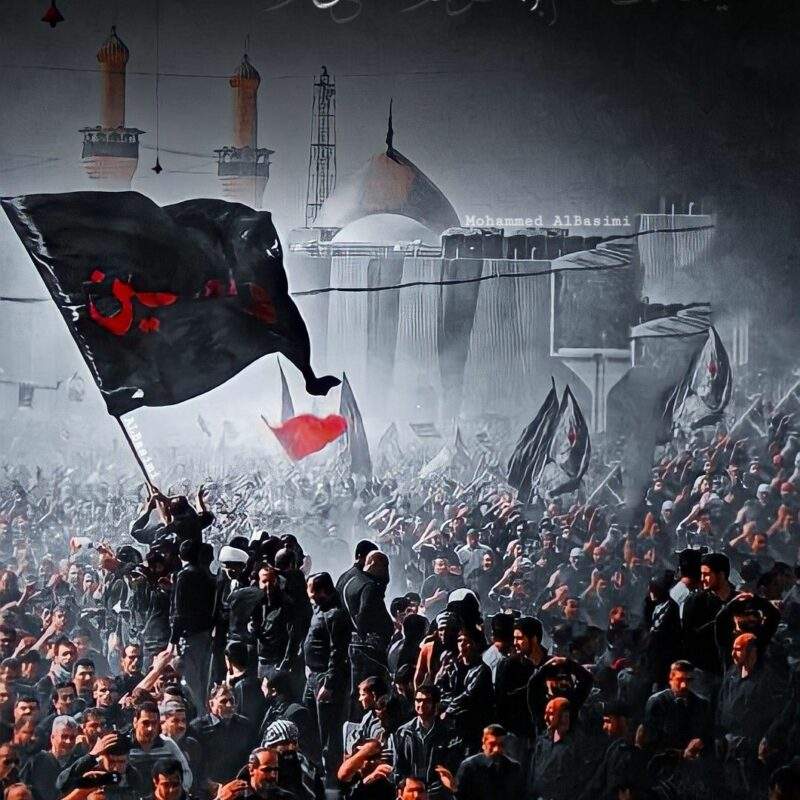
Today, the 20th of Safar, marks forty days since the martyrdom of Imam Husayn (peace be upon him) on the plains of Karbala. Today, millions stand before his shrine — and millions more turn their hearts toward it from every corner of the earth. But why forty days? And what is it about this day that the Imams of the Ahlul Bayt counted its visitation among the very signs of faith?
The Secret of Forty
The number forty carries a spiritual weight that runs through the Qur’an itself. Allah appointed for Musa “a time of forty nights” before speaking to him (2:51, 7:142). The transgressors were left to wander the earth for forty years (5:26). And the Qur’an describes the human being reaching maturity at forty, when he finally turns to his Lord and says, “My Lord! Grant me that I may give thanks for Your favor” (46:15). Forty, in the language of revelation, is the period of transformation — the time it takes for a soul to be made ready.
The traditions extend this meaning to grief itself. The Messenger of Allah (peace be upon him and his family) said: “Indeed the earth laments over the death of a true believer for the period of forty days.” And Imam Muhammad al-Baqir (peace be upon him) said: “Indeed the sky wept over al-Husayn for forty days.” Imam Ja’far al-Sadiq (peace be upon him) described it further: the heavens wept blood for forty days, the earth was covered in darkness for forty days, the sun rose in eclipse and redness for forty days, and the angels wept for forty days.
If the heavens and the earth observed forty days of mourning for Husayn, then today — the fortieth day — is not merely a date. It is the day creation itself completed its mourning, and the day his lovers were called to arrive.
A Sign of the Believer
The visitation of this day is not a folk custom. Imam Hasan al-Askari (peace be upon him), the eleventh successor of the Prophet, declared: “The signs of a believer are five: praying fifty-one units of prayer, the Ziyarat of Arba’een, wearing a ring on the right hand, placing the forehead on the earth in prostration, and pronouncing ‘Bismillahir Rahmanir Raheem’ aloud in prayer.”
Consider what this means. Alongside the daily prayer itself, the Imam placed the remembrance of Husayn on his fortieth — making the bond with Karbala part of the very definition of belief.
“He Gave His Lifeblood for You”
The words we recite today were taught by Imam Ja’far al-Sadiq (peace be upon him) to his companion Safwan al-Jammal, who was instructed to visit Imam Husayn and recite this ziyarat in the afternoon of Arba’een. At its heart lies a sentence that explains why Husayn died — and why the world still walks to him:
“He gave his lifeblood for You, to rescue Your servants from ignorance and from the bewilderment of misguidance.”
This is the meaning of the day. Karbala was not a tribal dispute or a contest for power. It was a sacrifice offered so that truth would remain distinguishable from falsehood until the end of time. The ziyarat continues: “I bear witness that you established the prayer, gave the zakat, commanded the good, forbade the evil, and were obedient to Allah until certainty came to you.”
Those who cannot stand in Karbala today are not excluded. The ziyarat may be recited from our homes, our centers, wherever we are — for as Jabir ibn Abdullah al-Ansari, the first pilgrim of Arbaeen, learned from the Prophet himself: “Whosoever loves a nation will be resurrected with them, and whosoever loves the deed of a nation is counted as one who participated in it.”
The Walk That Never Ends
Forty days ago, it seemed the enemies of Husayn had won. His camp was burned, his family taken in chains, his body left on the sand. Today, forty days later, the answer of history began: one blind old companion arrived at his grave and wept — and he has been followed, year after year for fourteen centuries, by the largest peaceful gathering the world knows.
Yazid has no pilgrims. Husayn has millions.
On this Day of Arbaeen, whether our feet stand on the soil of Karbala or our hearts travel there from afar, we renew the pledge contained in the ziyarat: “My heart submits to your heart, and my affair follows your affair.” The forty days of mourning are complete. The love they produced has no end.
Peace be upon Husayn, and upon Ali son of Husayn, and upon the children of Husayn, and upon the companions of Husayn.