The Hidden Guide: Reflecting on the Minor Occultation This Monday
The belief in the occultation of the Twelfth Imam, Imam Mahdi (ʿajjal Allāhu farajahu), is a central pillar in Twelver Shia theology. It reflects both a historical reality and an enduring spiritual connection between the Imam and the Muslim community.
The Minor Occultation (Ghaybat al-Ṣughrā)
The Minor Occultation began in 260 AH (874 CE) following the martyrdom of the Eleventh Imam, Imam Hasan al-Askari. During this period, the Imam was not publicly accessible, but he maintained contact with his followers through a series of appointed representatives known as the Four Deputies (al-Nuwwāb al-Arbaʿa). These were:
Uthman ibn Sa’id al-Amri
Muhammad ibn Uthman
Husayn ibn Ruh al-Nawbakhti
Ali ibn Muhammad al-Samarri
Through them, the Imam answered questions, guided the community, and ensured continuity of divine leadership. This period lasted approximately 70 years.
A well-known and reliable Shia source, Kitab al-Ghaybah, documents many of these communications, as does Al-Kafi, which preserves narrations regarding the occultation and the role of the Imam.
Transition to the Major Occultation
In 329 AH (941 CE), shortly before the death of the fourth deputy, a final letter from the Imam declared the end of the Minor Occultation and the beginning of the Major Occultation (Ghaybat al-Kubrā). In this period, there would be no specific representatives, and the community would be guided through scholars and the teachings of the Ahl al-Bayt.
The Promise of Reappearance
Shia belief holds that the Imam is alive and will reappear by the will of Allah to establish justice and equity across the world. Numerous narrations affirm this promise. The Prophet Muhammad ﷺ is reported to have said:
“If only one day remained for the world, Allah would prolong that day until a man from my progeny… fills the earth with justice and equity as it had been filled with ظلم (oppression).” (Referenced inBihar al-Anwar)
His reappearance is not merely a future event, but a certainty rooted in divine wisdom. The occultation itself serves as a test of faith, patience, and steadfastness.
The Need for His Presence
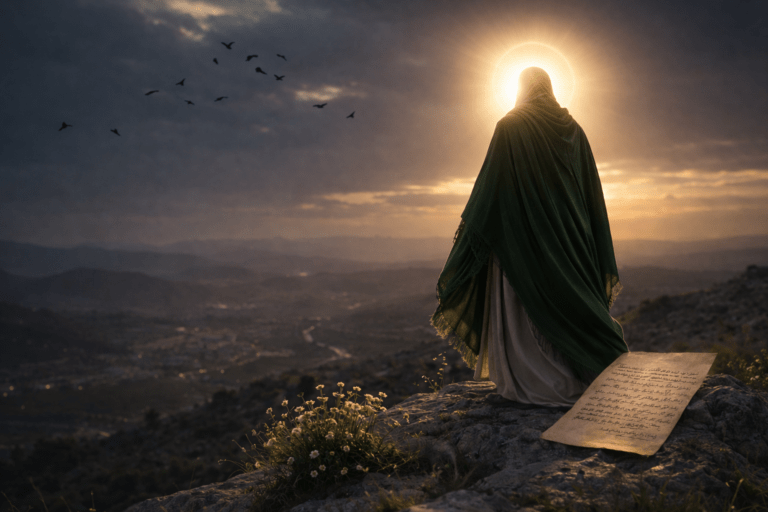
While the Imam is in occultation, his existence remains a source of spiritual stability and unseen guidance. Classical scholars, including Shaykh al-Saduq, have likened the Imam during occultation to the sun behind the clouds—hidden from direct sight, yet continuously providing light and benefit.
Today, the human condition—marked by moral confusion, spiritual emptiness, and disconnection from divine values—highlights the depth of humanity’s need for divinely guided leadership. The Imam represents the perfect embodiment of justice, mercy, and truth. His presence, even in occultation, anchors hope and direction for believers.
More than ever, individuals seek clarity, purpose, and authentic guidance. The awaited reappearance of the Imam is not only about global justice, but also about restoring balance within the human soul and society at large.
Our Responsibility During Occultation
The period of occultation is not passive. Believers are encouraged to:
Strengthen their knowledge and connection to the teachings of the Ahl al-Bayt
Uphold justice and ethical conduct in their daily lives
Pray for the hastening of the Imam’s reappearance (duʿāʾ al-faraj)
Support and follow righteous scholars
In doing so, they prepare themselves and their communities to be among those who will recognize and support him when he returns.
Conclusion
The Minor Occultation established a bridge between direct divine leadership and the current era of responsibility and faith. The awaited reappearance of Imam Mahdi remains a living hope—one that calls believers to self-purification, awareness, and readiness. His return will not only transform the world outwardly, but awaken hearts inwardly, restoring the divine purpose for which humanity was created.