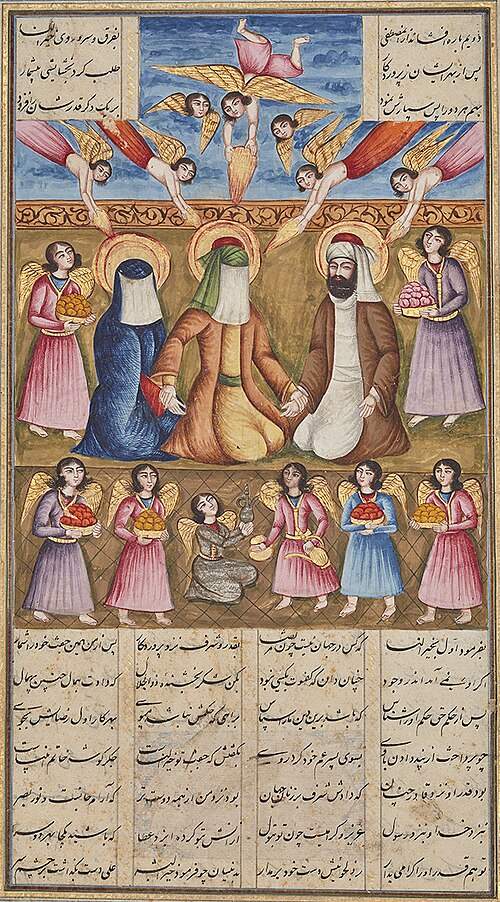
The marriage of Ali ibn Abi Talib and Fatimah al-Zahra is marked on the 1st of Dhul Hijjah. It’s often mentioned, but usually in passing, without really pausing on what made it stand out.
What’s striking is how simple it was.
There was no sense of excess. No pressure to impress. The focus wasn’t on display or status, but on the foundation of the marriage itself. It was built on trust, shared belief, and a clear sense of purpose.
In Bihar al-Anwar, descriptions of their home life show just how modest it was. There are accounts of basic living conditions, very little in terms of material comfort, yet a strong sense of contentment and stability.
That contrast is what makes it memorable.
It’s easy to assume that significance comes from scale. That something has to be large or impressive to matter. This marriage shows the opposite. Its impact didn’t come from how it looked, but from what it was.
There is also a sense of balance in how they supported one another. Responsibilities were shared, and there was a clear respect in how they lived together. It wasn’t idealised in an unrealistic way. It was grounded.
Looking at it now, it feels very different from what people are used to seeing. That difference is probably why it still gets mentioned.
And finally, their marriage is remembered not because of how it began, but because of what it became. A partnership that carried meaning far beyond the moment itself.